What Size Recliner for a Short Person? Measure It Right
On this page (9 sections)
- Choosing the Right Recliner Size for Shorter Individuals
- Key Measurements to Consider for a Petite Recliner
- Understanding Overall Recliner Dimensions
- Looking for Specific Features: Petite and Compact Models
- How to Measure Your Current Chair for Comparison
- Measuring Your Body: A Quick Guide
- Recliner Checklist for Shorter Individuals
- Conclusion
- Frequently Asked Questions
Finding the right recliner as a short person is all about paying attention to seat depth and overall dimensions. You need a recliner that supports your legs fully and allows your feet to rest comfortably on the floor when you’re sitting upright. Don’t let your feet dangle – that’s a sure sign it’s not the right fit for your height. Look for models specifically designed for shorter individuals, often labeled as “petite” or “small.”
When you’re shorter, a standard recliner can feel like you’re sinking into it. You might find your head doesn’t have proper support, or the armrests are too high. Measuring carefully and understanding the seat-to-back height is key. It ensures you get that cozy, supported feeling without feeling overwhelmed by the chair’s size. Many retailers now offer helpful guides for finding the perfect fit based on height and leg length.
- Recliners for short people need specific measurements.
- Focus on seat depth, seat-to-back height, and overall chair size.
- Look for “petite” or “small” recliner models.
- Proper foot support is essential for comfort.
Let’s walk through exactly how to measure and what to look for to ensure your next recliner is a perfect fit for your stature.
Choosing the Right Recliner Size for Shorter Individuals
Finding a recliner that feels just right when you’re shorter can sometimes feel like a treasure hunt. For a complementary fit guide, see our sizing advice for taller men. Standard furniture often seems designed for taller folks. But don’t worry, we’ve found that with a few key measurements, you can pinpoint a recliner that offers perfect support and comfort. It’s all about matching the chair’s dimensions to your body, not the other way around.
The goal is to avoid that “swimming in the chair” feeling. You want your feet to comfortably reach the floor when you’re sitting up. Your head should also be supported without having to crane your neck. We’ll guide you through the measurements that matter most.
Key Measurements to Consider for a Petite Recliner
When you’re looking for a recliner that fits your stature, a few specific measurements are your best friends. These numbers help ensure the chair hugs you perfectly, offering support where you need it most. It’s like tailoring a suit, but for your relaxation time.
Seat Depth: The Foundation of Comfort
Seat depth is the distance from the front edge of the seat cushion to the back of the seat cushion. For shorter individuals, this is often the most critical measurement. Too deep, and your legs will dangle. You won’t be able to lean back properly because your thighs won’t be fully supported.
We recommend a seat depth that allows you to sit with your back against the backrest. Your feet should rest flat on the floor, with about two to four fingers’ width between the back of your knee and the edge of the seat cushion. Research suggests that an ideal seat depth for many shorter adults ranges from 17 to 19 inches.
Why is this so important? When your seat depth is correct, your hamstrings are supported. This promotes better circulation and reduces pressure on your legs. A proper fit means you can relax without fidgeting to find a comfortable position. It’s a small detail that makes a big difference in overall comfort.
Seat-to-Back Height: Where Your Back Gets Support
Next up is the seat-to-back height. This refers to the height of the recliner’s backrest, measured from the seat cushion up. For shorter people, a backrest that’s too tall can cause your head to jut out awkwardly. You might find yourself trying to prop your head up with a pillow.
Ideally, the top of the backrest should align with the top of your shoulders or slightly below. This ensures that the headrest provides actual support for your head and neck. Many experts suggest that for shorter individuals, a backrest height of around 20 to 24 inches from the seat is often suitable.
This measurement is key for preventing neck strain. When the headrest cradles your head properly, it allows your neck muscles to relax. You won’t feel like you’re working to keep your head upright. It enhances the entire lounging experience.
Armrest Height: Finding Your Resting Place
The height of the armrests is another factor that impacts comfort. When you’re sitting upright, your forearms should rest comfortably on the armrests. Your shoulders should be relaxed, not hunched up to reach them.
Too-high armrests can force your shoulders into an uncomfortable, elevated position. Too-low armrests offer no support at all. We found that armrest heights from the seat cushion typically around 6 to 8 inches work well for many shorter individuals.
This ensures your arms can maintain a natural, relaxed posture. It contributes to overall comfort, especially during longer sitting sessions. Think of it as finding the perfect place to set down your arms while you unwind.
Understanding Overall Recliner Dimensions
Beyond the seat measurements, the overall size of the recliner matters. A petite recliner will have a smaller footprint. This means it won’t overwhelm your living space. It also means the proportions are scaled down for a better fit.
Width and Depth: Fitting Your Space and Your Body
While you’re looking at seat depth and back height, don’t forget the overall width and depth of the chair. A petite recliner is generally narrower than a standard one. This is good for smaller rooms. It also means the armrests are closer together, which can feel more enveloping and supportive.
The overall depth when the chair is in the upright position should also be considered. You want enough clearance to recline it fully without it hitting a wall or coffee table. Many smaller recliners have a depth of around 30 to 35 inches when closed.
When fully reclined, these chairs are also designed to take up less space. This is a big win for apartments or smaller homes. You get the full reclining experience without needing a giant room. We found that models designed for smaller frames often have a reclined depth closer to 60 to 65 inches.
Height of the Recliner: Proportionality is Key
The overall height of the recliner also plays a role. A petite recliner will have a proportionally lower back and overall height. This ensures that even the tallest part of the chair doesn’t feel towering. It creates a sense of balance with your own height.
Visually, a chair that is too tall can make a room feel smaller. A proportionally sized recliner will blend better into your decor. It simply looks more natural and feels more inviting.
Looking for Specific Features: Petite and Compact Models
When shopping, look for recliners specifically labeled as “petite,” “small,” or “compact.” These are often designed with shorter individuals in mind. They will have adjusted dimensions to better suit a smaller frame.
What “Petite” or “Small” Usually Means for Recliners
Manufacturers use these terms to indicate that the chair has reduced dimensions. This typically means a shorter seat depth, a lower back height, and a narrower overall width. They are engineered to provide comfort and support for people under a certain height, often around 5’4″ and below.
These chairs might also feature a slightly less aggressive recline. This can be helpful if you have limited space behind the chair. The focus remains on providing a cozy and ergonomic experience scaled down to your size.
The Footrest: A Crucial Element for Shorter Legs
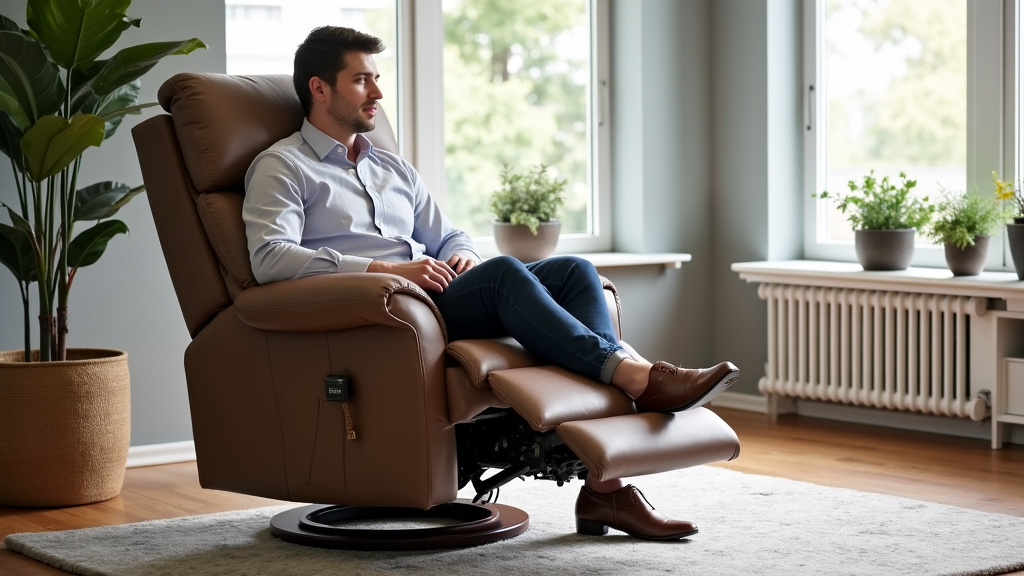
A key feature to check is the footrest. When you recline, the footrest should extend far enough to support your calves and lower thighs. Your feet should not dangle in the air.
We found that on petite models, the footrest often extends to a length that complements the shorter seat depth. This ensures that as the back reclines, the footrest provides continuous support. It prevents that awkward gap between the back of your knee and the footrest.
How to Measure Your Current Chair for Comparison
Before you go shopping, grab a tape measure. It’s a great idea to measure your favorite comfortable chair at home. This gives you a benchmark. You can see what feels good now and what you want to replicate or improve upon.
Measure the seat depth from the front edge to the back. Measure the height from the seat cushion to the top of the backrest. Also, check the height of the armrests from the seat.
Take these measurements with you when you shop. You can even measure a friend’s recliner if they have one you like. This hands-on approach can be very revealing. It helps you translate abstract numbers into real-world comfort.
Measuring Your Body: A Quick Guide
To ensure a perfect fit, it’s helpful to take a couple of simple body measurements yourself. This isn’t about precise tailoring, but about getting a feel for what dimensions will work best for you.
Your Inseam: The Key to Seat Depth
Sit on a firm chair with your back straight and your feet flat on the floor. Have someone help you measure the distance from the back of your knee to the sole of your foot. This is your inseam measurement.
As a general guideline, your ideal seat depth will be roughly your inseam measurement plus about 1 to 2 inches. However, remember that personal preference plays a role. This measurement helps ensure your legs are fully supported.
Your Torso Height: For Back and Head Support
To gauge back support needs, sit upright again. Measure the distance from the seat cushion to the top of your shoulders. Then, measure from your shoulders to the top of your head.
This helps you understand how much backrest height you need. It also helps determine if you’ll benefit from a recliner with an adjustable headrest or a smaller overall back.
Recliner Checklist for Shorter Individuals
Here’s a quick checklist to help you find that perfect-fit recliner:
- Seat Depth: Aim for 17-19 inches. Your feet should be flat on the floor with 2-4 fingers’ width behind your knees.
- Seat-to-Back Height: Look for a backrest that ends around your shoulders or slightly below.
- Armrest Height: Should allow your shoulders to remain relaxed when resting your forearms.
- Overall Size: Consider “petite,” “small,” or “compact” models for scaled-down proportions.
- Footrest Extension: Ensure it fully supports your calves and lower thighs when reclined.
- Test It Out: If possible, sit in the recliner to feel the support and comfort.
By focusing on these specific measurements and features, you can navigate the world of recliners with confidence. You’ll find a chair that not only looks great but feels like it was made just for you. Happy reclining!
Conclusion
Finding the perfect recliner when you’re shorter doesn’t have to be a struggle. By focusing on key measurements like seat depth, seat-to-back height, and armrest position, you ensure proper support and comfort. Remember to look for models labeled “petite” or “small” and always consider how the footrest extends to support your legs fully. Don’t forget to measure your current favorite chair and even your own body for a solid baseline.
Your next step is to visit a furniture store or browse online with these measurements in mind. Try sitting in different chairs, paying close attention to how your feet rest and your head is supported. With this information, you’re well-equipped to choose a recliner that feels custom-made for your height, making your relaxation time truly enjoyable. Your next step is to visit a furniture store or browse online with these measurements in mind, perhaps considering a zero gravity recliner.
Frequently Asked Questions
What if I can’t find a recliner labeled “petite”?
If you can’t find a chair specifically marked as “petite” or “small,” focus on the measurements we discussed. Look for standard recliners with a seat depth of 17-19 inches and a lower overall back height. You can also check the dimensions of the armrests to ensure they are not too high. Many chairs can work if the dimensions are right for you.
Can a standard recliner be made to fit a shorter person?
Sometimes, minor adjustments can help. You might use decorative pillows to better support your lower back or neck. However, fundamental issues like a seat that’s too deep or a footrest that doesn’t reach your calves are harder to fix without altering the chair itself. It’s usually best to find a chair designed for your size.
How important is the footrest extension for short people?
The footrest extension is very important for shorter individuals. When you recline, the footrest should support your calves and lower thighs. If it’s too short, your feet will dangle, causing discomfort and poor circulation. We found that petite models typically have footrests designed to work with shorter seat depths.
Should I be concerned about the overall width of a recliner?
Yes, the overall width can matter, especially for smaller spaces. Petite recliners are often narrower, which can make them a better fit for apartments or smaller rooms. A narrower design can also make the armrests feel closer, providing a more secure and enveloping feeling for some users.
What’s the best way to test a recliner for comfort if I have short legs?
When testing a recliner, sit all the way back in the upright position. Your feet should rest flat on the floor without your knees extending past the seat edge. When you recline, check if the footrest supports your calves without a gap. Also, ensure your head is comfortably supported by the backrest, not sticking out above it.


