What Is a Wall Saver Sofa?
A wall saver sofa reclines with less clearance behind it by moving its seat or reclining parts forward as the back tilts. Measure the sofa's required wall gap and its full reclined depth before you choose a spot.
On this page (10 sections)
- What is a wall saver sofa?
- How does a wall saver reclining layout work?
- How much space should you leave behind the sofa?
- What should you measure before choosing a spot?
- How is a wall saver sofa different from a regular reclining sofa?
- What sofa layouts can save space behind the back?
- Which chair examples explain the wall saver idea?
- What should you check in a wall saver sofa's mechanism?
- Is a wall saver sofa right for a small room?
- How do you choose a wall saver sofa?
A wall saver sofa reclines with less clearance behind it by moving the seat or reclining parts forward as the back tilts. This layout can help in a compact room, but you still need to check the sofa's required wall gap and its full reclined depth.
The name describes a space-saving layout, not one standard mechanism. A sofa might use a forward-moving seat, a gliding base, or another design, so check the exact model's instructions before planning the room.
What is a wall saver sofa?
A wall saver sofa is a reclining sofa built to need less open space behind its back than a traditional recliner. As you recline, its seat or frame shifts forward so the back can tilt without needing as much room behind it.
That motion changes where the sofa uses space. It may reduce the gap at the wall, while still extending farther into the room when reclined.
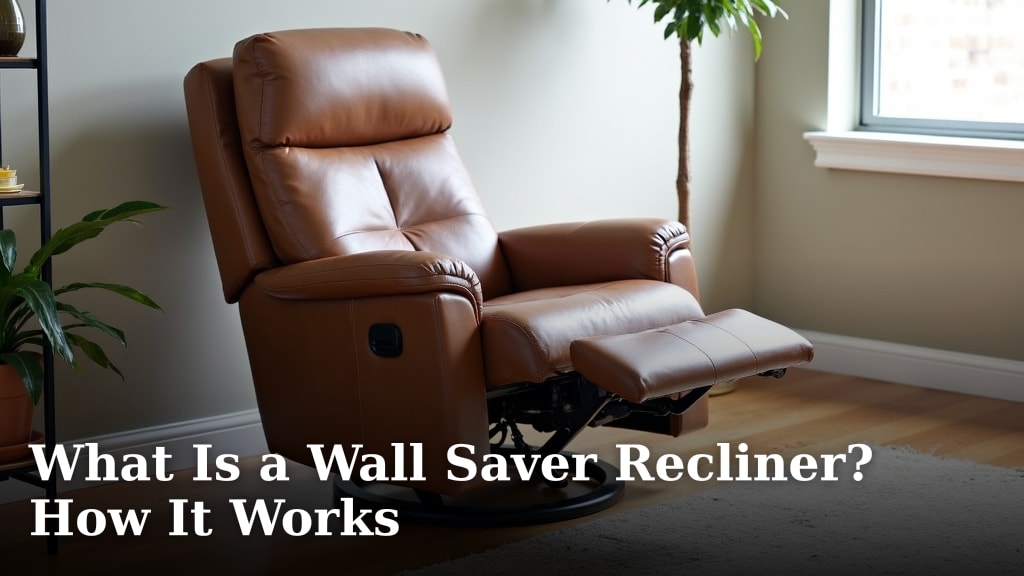
A wall saver layout can suit a room where a standard reclining sofa would sit too far from the wall. For the chair version of the design, see [What Is a Wall Saver Recliner?
How It Works](/what-is-a-wall-saver-recliner/).
How does a wall saver reclining layout work?
The reclining parts move forward as the back tilts, which reduces how far the back needs to travel toward the wall. The exact movement depends on the sofa's mechanism and may differ between models.
A traditional recliner often needs room for its back to travel backward. A wall saver design shifts some of that movement forward, but it still needs room for the footrest and the person using it.
Before you decide where the sofa will go, check both measurements: the wall clearance when upright and the depth when fully reclined. A low clearance number doesn't mean the sofa takes up little floor space once open.
Is a wall saver sofa the same as a wall hugger sofa?
Wall saver and wall hugger are commonly used for reclining furniture that needs less room behind it. The terms don't guarantee a specific mechanism or a shared clearance measurement.
Descriptions can vary by brand. Look for an actual measurement and an explanation of how the seat moves, then compare it with the space available in your room.
A wall hugger recliner's basic design can help you understand the related chair layout. Sofas have more seats and a longer footprint, so check sofa measurements separately.
How much space should you leave behind the sofa?
Leave the clearance the specific sofa requires, measured from the wall to the back of the sofa in its upright position. Don't assume every wall saver sofa can touch the wall.
Measure from the baseboard or any other point that sticks out farthest. If the sofa sits near a window, radiator, outlet, or doorway, include those obstacles in your plan.
Then measure the room with the sofa fully reclined. Check whether the footrests block a path, reach a table, or interfere with another seat.
A simple floor plan can help. Mark the sofa's upright footprint, the open reclined footprint, and the space needed to walk around it.
What should you measure before choosing a spot?
Measure the room, the sofa, and the path into the room. A close wall fit only helps if the sofa can be delivered and reclined without blocking something else.
Check these points:
- The sofa's width and upright depth.
- The required wall clearance.
- The full reclined depth.
- The width of doorways, halls, and turns along the delivery route.
- The space needed to walk past the sofa when it is open.
- Nearby tables, lamps, and other furniture.
A reclining sofa can have separate seats or a shared mechanism. If different seats recline independently, allow for the open position of each seat; if they move together, plan for the whole sofa's movement.
For a broader overview of how reclining seats are built into sofas, read What Is a Recliner Sofa? The Simple Version.
How is a wall saver sofa different from a regular reclining sofa?
A wall saver sofa is designed to reduce the space needed behind it, while a regular reclining sofa may need more room for the back to tilt. Both can take up considerable floor space when fully reclined.
The difference is most useful when a sofa needs to sit near a wall. It doesn't automatically mean the wall saver model is narrower, shorter, or better for every room.
For a compact layout, compare a best wall hugger reclining sofa with models that fit your width, clearance, and reclined-depth needs. If you prefer leather, browse best wall hugger reclining leather sofa options.
What sofa layouts can save space behind the back?
Wall saver and wall hugger layouts are the main reclining designs to look for when back clearance is tight. Some sofas also use sectionals or loveseats, but their size and seat arrangement affect the fit.
A reclining sectional may place the recliner at one end, in a corner, or on more than one seat. Measure its full footprint, including the chaise or corner section, and check which seats recline.
A loveseat takes less width than many sofas, but the reclining seats still need room in front. Compare the room plan with best leather reclining sectional options if you need a larger arrangement, or best wall hugger loveseat recliners if a smaller two-seat setup makes more sense.
The term “wall saver” doesn't tell you whether a sofa rocks. For the chair comparison, see wall recliners and rocking recliners.
If that motion matters, review wall hugger rocker recliners and check the details of the sofa you're considering.
Which chair examples explain the wall saver idea?
A wall saver sofa uses a reclining layout to manage space behind its back. These chair examples show related space-saving and reclining features, but they are individual recliners, not sofas.
MCombo describes this power recliner as suitable for compact living rooms, bedrooms, and RVs. Its backrest and footrest adjust together from 108° to 145°.
Korser's chair swivels 360°, rocks, and reclines up to 165°. It does not have a wall-hugger feature in the details here, so check the space it needs behind it before placing it near a wall.
CANMOV's chair reclines up to 145° and has an expanded length of 65 in. That measurement is for the chair, not a wall clearance figure, so use it only to plan the open footprint.
What should you check in a wall saver sofa's mechanism?
Check how the seat and back move, and look for a measured wall gap. The label alone doesn't tell you whether the sofa slides forward, glides, or uses another layout.
Confirm that each reclining seat has enough front clearance for its footrest. If you plan to place a sofa against a wall, check whether the back, arms, or trim could rub during movement.
Also look at how the controls work and whether every seat reclines. Power and manual mechanisms have different controls, but either type still needs the space its movement requires.
Is a wall saver sofa right for a small room?
It can be a good fit when you need reclining seats near a wall, provided the open sofa leaves enough room in front. Measure the path through the room as well as the sofa's wall gap.
A wall saver layout may help keep more floor space usable behind the sofa. It won't solve a room that's too shallow for the footrests or too narrow for the sofa itself.
Choose the layout based on the tightest measurement. If the back clearance is the main problem, prioritize a verified wall gap; if the room is short from front to back, compare fully reclined depth first.
How do you choose a wall saver sofa?
Choose a wall saver sofa by matching its wall clearance and reclined depth to your room. Then check the seat layout, delivery path, and the space left for walking.
A wall saver design suits rooms where a sofa needs to sit closer to a wall. A conventional reclining sofa may work just as well if you have enough space behind it.
Measure before you shop, and use the exact sofa dimensions to confirm the fit. For a chair-sized alternative, compare [What Is a Wall Saver Recliner?
How It Works](/what-is-a-wall-saver-recliner/).
Frequently asked questions
What is a wall saver sofa?
A wall saver sofa is a reclining sofa designed to need less open space behind it than a traditional reclining sofa. Depending on its mechanism, the seat or base moves forward as the back reclines, so the sofa can sit closer to a wall.
Check the required clearance for the exact model.
How much space does a wall saver sofa need behind it?
The needed gap varies by sofa and reclining mechanism. Check the maker's clearance measurement, then leave that amount between the sofa and the wall.
Also measure the sofa's full reclined depth and keep walkways clear in front of it.
Is a wall saver sofa the same as a wall hugger sofa?
The terms are often used for reclining furniture designed to work with less room behind it. Names alone don't confirm how a particular sofa moves or how close it can sit to a wall, so check the model's mechanism and clearance requirements.
Can a wall saver sofa go directly against a wall?
Usually, you should leave the clearance its maker specifies instead of pushing the sofa directly against the wall. A reclining mechanism may still need a small gap, and upholstery or trim can rub if the furniture touches the wall while moving.