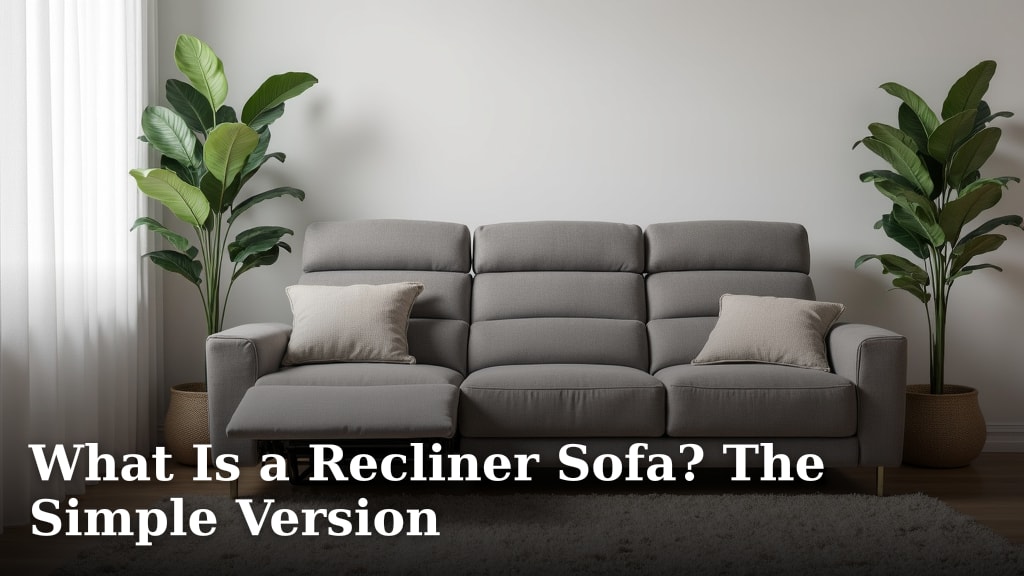
What Is a Recliner Sofa? The Simple Version
A recliner sofa is an upholstered chair or sofa with a built-in mechanism that allows you to tilt the backrest and extend the footrest. This lets you lean back and relax, shifting your body into a more comfortable, laid-back position.
Think of it as your seat’s secret superpower for ultimate comfort. We found that the best models provide a smooth, satisfying motion that can relieve stress on your back and legs. The primary benefit is that it’s designed for relaxation and support, helping you unwind after a long day.
- A recliner is a piece of furniture with a movable back and footrest.
- It lets you easily switch from sitting upright to a relaxing, leaned-back position.
- Key benefits include personalized comfort and potential support for your back and joints.
- Common types include manual (using a lever or handle) and power (using an electric button).
- When shopping, consider your room’s space and whether you want power or manual control.
Below, we break down everything you need to know about choosing and using a recliner. Let’s walk through the main features, types, and buying tips to find your perfect fit.
The Basic Idea Behind a Recliner Sofa
At its heart, a recliner is a piece of furniture engineered for two things: motion and support. It’s not just a chair that leans back; it’s a seat with a mechanical system that lets you change its shape. This lets you move from a sitting position to a resting position with minimal effort. The goal is to take the strain off your body.
Think of your own body after a long day. Your spine and legs are tired. A recliner allows you to distribute your weight more evenly. This can help relax tense muscles and give your joints a break. It’s about creating a custom position that feels just right for you.
How the Reclining Mechanism Actually Works
The magic is in the frame and the recliner’s gears. When you activate it, two things happen together. The seat slides forward slightly. The backrest tilts backward. At the same time, the footrest lifts up from the base.
This coordinated movement is what makes it smooth and comfortable. A cheap mechanism can feel jerky or wobbly. A well-built one feels solid and controlled. The motion should feel natural, not like you’re forcing it.
The Key Moving Parts
The Reclining Frame: This is the internal skeleton. It’s usually made of metal for strength and durability. It has hinges and pivot points that allow the movement.
The Footrest Mechanism: This connects the frame to the footrest panel. In manual recliners, a lever or handle engages gears. In power recliners, a motor does the work.
The Upholstery and Padding: This covers the frame. Good padding, often high-density foam, keeps you comfortable in both sitting and reclining positions.
Exploring the Two Main Types of Recliners
When you start shopping, you’ll find there are two primary categories. The main difference is how you operate them. One is simple and traditional. The other is modern and convenient. Your choice depends on your needs, budget, and how much you value ease of use.
Manual Recliners: The Classic, No-Plugs-Needed Option
A manual recliner is the original design. You provide the power to operate it. Common methods include a side handle you pull, a lever on the side, or a push-back mechanism. To recline, you push back against the backrest while pulling the handle.
The big advantage is there’s nothing to plug in. You can place it anywhere in the room. They are also typically less expensive than power models. The motion can be a bit of a workout, but it gives you complete control.
Common Manual Controls
Pull-Handle: A lever on the right side is the most common. You pull it to unlock the mechanism, then lean back.
Push-Back: There’s no handle. You simply press firmly on the backrest, and it reclines. It’s the most discreet design.
Wall-Hugger Manual: Some manual designs are made to be placed close to a wall. They slide forward as they recline, saving space.
Power Recliners: The Effortless, Button-Controlled Choice
Power recliners use an electric motor. You press a button on a remote or a control panel, and the motor moves the frame for you. This is a game-changer for many people. It offers smooth, infinite positions. You can stop it exactly where it feels best.
They are especially helpful for those with limited mobility or strength. There’s no strain to operate. Many models also come with extras like built-in USB ports for charging devices or adjustable headrests.
Power Recliner Extras to Consider
Zero-Gravity Position: This feature reclines you so your feet are elevated above your heart. Some studies suggest this position can reduce stress on your spine and improve circulation.
Heat and Massage: Higher-end models include built-in heating elements and vibrating massage motors. These can add another layer of muscle relaxation.
Battery Backup: A useful feature that lets you operate the recliner during a power outage so you aren’t stuck in a reclined position.
| Feature | Manual Recliner | Power Recliner |
|---|---|---|
| Operation | Uses your strength via handle, lever, or push | Uses an electric motor with a button |
| Control | Usually has 2-3 set positions | Infinite, customizable positions |
| Placement | Can be placed anywhere | Must be near an electrical outlet |
| Cost | Generally more affordable | Typically higher upfront cost |
| Best For | Budget shoppers, flexible placement | Convenience, limited mobility, tech features |
Beyond the Basic Rocker-Recliner
You might picture the classic, puffy rocker-recliner first. But the style has evolved. Today, recliners come in designs that look like standard living room furniture. They don’t scream “recliner” until you activate them.
Common Recliner Sofa Styles
The Classic Rocker-Recliner: The traditional single chair that rocks and reclines. It’s often overstuffed for a cozy feel.
The Lift Recliner: A special type with a powerful motor that tilts the entire chair forward. It helps the user move to a standing position safely. This is a vital piece of furniture for those with severe mobility challenges.
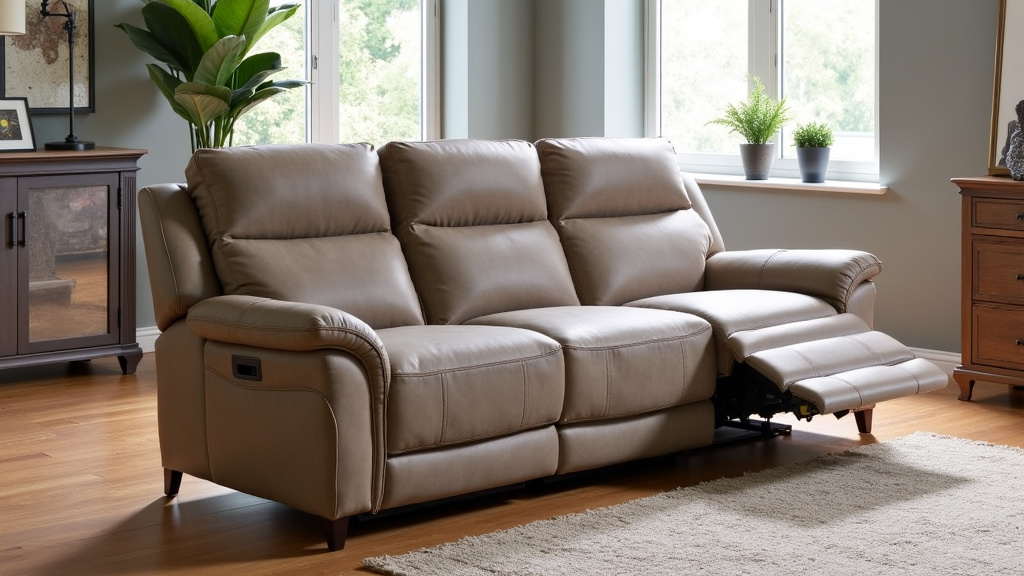
The Reclining Sofa or Loveseat: This is a multi-seat piece where one or more seats have independent reclining mechanisms. It lets different people choose their own comfort level.
The Wall-Saver or Wall-Hugger: Designed with a forward-sliding motion. This lets you place the recliner just inches from a wall, saving precious floor space in smaller rooms.
The Real-World Benefits You’ll Feel
Why do millions of people love these chairs? It’s not just about being lazy. The benefits are practical and can support your well-being. We found that the right recliner can be a helpful tool in your daily life.
Support for Your Body and Joints
When you recline and elevate your legs, you are not just relaxing. You are changing the pressure points on your body. Health resources like the Mayo Clinic note that elevating your legs can help reduce swelling and improve circulation. This is especially good after being on your feet all day.
The built-in backrest provides support that a regular sofa might not. By tilting back, you reduce the strain on your lower back muscles. For many, this leads to less discomfort after long periods of sitting.
A Dedicated Space for Relaxation
Your mind makes strong connections with places. If you always relax in your recliner, your brain starts to associate that chair with unwinding. It becomes your personal zone for decompressing. Reading a book, watching a movie, or just closing your eyes becomes more effective.
It signals to yourself and your family that this is your time. This small ritual can be a powerful part of managing daily stress.
Practical Help for Everyday Life
For new parents, a gliding recliner can be a lifesaver for rocking a baby to sleep. For someone recovering from surgery, a lift recliner can restore independence. These aren’t just comfort items; they are functional pieces of adaptive furniture for many households.
How to Choose Your Perfect Recliner
Finding the right one is about matching the chair to your body, your room, and your life. Let’s break it down into a simple checklist.
Your Body and Comfort Needs
Size Matters: Sit in it if you can. Your feet should touch the floor when upright. When reclined, your head should be supported by the headrest. Check the weight capacity to ensure it’s safe and sturdy.
Try the Motion: Operate the mechanism yourself. Is it smooth? Is it too hard or too easy? If buying a power model, listen to the motor. It should be relatively quiet.
Test the Comfort: Does the padding feel supportive, not just soft? Is the lumbar (lower back) area comfortable for your spine shape? Spend at least five minutes in it.
Your Room and Space
Measure Everything: Don’t guess. Measure the spot where you want the recliner. Then, measure the recliner’s dimensions in both the closed and fully reclined positions. You need clearance for the footrest to open and for the back to tilt.
Consider the Clearance: A standard recliner needs about 18 inches of space behind it. A wall-hugger model needs much less. Measure your wall space carefully.
Your Budget and Features
Manual vs. Power: Decide if the convenience of a power recliner is worth the higher cost. Do you have an outlet nearby? Is ease of use a top priority for you or a family member?
Fabric Choice: Look at the fabric’s durability rating (often called a “double rub” count). Higher numbers mean better durability for heavy use. Microfiber and performance fabrics are often stain-resistant and easy to clean.
Quick Recliner Shopping Checklist
Use this list when you’re browsing online or in a store. It will help you stay focused on what truly matters.
- Measured the space for both closed and reclined positions.
- Tested the mechanism for smooth, solid operation (manual or power).
- Sat in the chair for several minutes to check comfort and support.
- Checked the fabric for durability and ease of cleaning.
- Confirmed the power source location if buying a power model.
- Reviewed the warranty on the frame, mechanism, and motor (if applicable).
Conclusion
You now have a clear picture of what a recliner sofa is: a clever piece of furniture designed for motion and personalized support. It’s more than just a chair; it’s a dedicated spot for unwinding, with a mechanism that takes the strain off your back and legs. Whether you choose a simple manual model or a convenient power version, the right recliner can become a functional centerpiece for relaxation in your home.
Our final advice is simple. Before you buy, remember the golden rule: measure your space carefully. Then, make it a point to sit in your top choices and test the mechanism yourself. Your perfect fit is out there, ready to become your favorite seat in the house.
Frequently Asked Questions
What is the average weight limit for a recliner sofa?
Most standard recliners have a weight capacity between 250 and 300 pounds. However, many manufacturers offer sturdy models with higher limits, sometimes up to 500 pounds or more. Always check the product specifications before purchasing to ensure it meets your needs safely.
How much space do I need behind a recliner to open it?
For a standard recliner, you generally need about 18 inches of clearance from the wall. If you choose a “wall-hugger” or “wall-saver” model, it can be placed much closer, often requiring only 4 to 6 inches. The best approach is to measure the recliner’s total depth when fully open.
Is microfiber a good fabric for a recliner with kids or pets?
Yes, microfiber is often an excellent choice for busy households. Research shows its tight weave resists staining and makes liquids bead up, giving you time to blot them away. It’s generally durable and easy to clean, making it a practical option for everyday use.
Can a power recliner work during a power outage?
Not without a battery backup. Most power recliners will stop functioning when the electricity goes out. Some higher-end models include a battery backup system, but it’s often sold separately. Without it, you could be stuck in a reclined position until power is restored.
What’s better for my back: a firm or soft recliner?
A recliner with firm, supportive cushioning is typically better for your back than one that is overly soft. High-density foam provides consistent support for your spine and joints in both sitting and reclined positions. A seat that is too soft may not offer the proper alignment your back needs to relax.