What Is a Nursery Glider? A Quick Explainer
On this page (6 sections)
A nursery glider is a special type of rocking chair. It moves back and forth in a smooth, gliding motion. These chairs are designed for comfort and relaxation, especially for parents. You’ll often find them in a baby’s nursery room.
Beyond just rocking, many gliders offer extra features. These might include a lumbar pillow for back support or a matching ottoman. They are built to be gentle, providing a peaceful spot for feeding or comforting your baby. Many parents find them a must-have for late-night feedings.
- A nursery glider is a rocking chair with a smooth, gliding motion.
- They are designed for comfort during feeding and comforting babies.
- Often, they come with added features like lumbar support and ottomans.
- Gliders provide a peaceful spot for parents in the nursery.
We’ve put together a quick rundown on what makes a nursery glider so popular. Let’s get you acquainted with these comfy pieces of nursery furniture.
Understanding the Nursery Glider: More Than Just a Rocker
So, what exactly is a nursery glider, and why has it become such a popular choice for new parents? At its heart, a nursery glider is a specialized rocking chair. It’s designed with comfort and ease in mind, providing a gentle, soothing motion that can help calm both baby and parent. Unlike a traditional rocking chair that might have a wider arc, a glider moves back and forth in a controlled, smoother path. This smooth action is one of its main selling points.
Think of it as a calm space in the often-hectic world of early parenthood. These chairs are specifically engineered to make those long feeding sessions and late-night cuddles more comfortable. We found that many parents consider them a centerpiece of the nursery, providing a dedicated spot for bonding.
The Smooth Gliding Motion Explained
The defining feature of a nursery glider is its unique movement. Instead of pivoting on a central point like a traditional rocker, a glider uses a concealed mechanism. This mechanism allows the chair to glide forward and backward on a track. This motion is generally smoother and more controlled than that of a standard rocking chair. Many people find this fluid motion particularly calming, almost like a gentle sway.
We’ve noticed that the gliding action is often described as feeling very natural. It mimics the comforting motion of rocking a baby in your arms. This predictability in movement can be a big plus when you’re tired and trying to settle a fussy infant. It provides a consistent, gentle rhythm that can be incredibly effective.
What Makes a Glider Different from a Rocker?
It’s easy to get gliders and rockers mixed up, but there are key differences. A traditional rocking chair typically has two curved legs or rockers that allow it to swing back and forth. This motion can sometimes be a bit more pronounced and less controlled. Gliders, on the other hand, move on a base or track, offering a more contained and fluid glide. This distinction is important for understanding why parents might choose one over the other.
We also found that the stability of a glider is often superior. Because they sit on a base rather than having curved legs, they tend to feel more solid and secure. This can give parents extra peace of mind, especially when they are holding a precious little one. The enclosed mechanism also means there are fewer pinch points, which is a great safety feature for homes with curious toddlers.
Key Features You’ll Find in Nursery Gliders
Nursery gliders aren’t just about the rocking motion. Manufacturers have added a range of features to enhance comfort and functionality. These additions can make a big difference during those marathon feeding sessions or when you just need a moment of peace. Understanding these extras can help you pick the perfect glider for your needs.
Built-in Comfort and Support
Many gliders come with features designed to support your body. One of the most common is a lumbar pillow. This is an adjustable or fixed pillow placed at the lower back. It helps maintain good posture and reduces strain on your back, which is incredibly useful after childbirth. We’ve heard from many parents that good back support is a non-negotiable feature.
Other gliders might offer padded armrests. These make it more comfortable to hold your baby for extended periods. Some even have adjustable headrests. These can be a lifesaver for taller parents or for those who need extra neck support. The goal is to make the chair as ergonomic and comfortable as possible for you.
The Matching Ottoman: A True Game-Changer
Perhaps one of the most sought-after features is a matching ottoman. This footrest isn’t just for show; it’s designed to work in tandem with the glider. When you recline in the glider, you can extend your legs onto the ottoman. This allows you to elevate your feet and achieve a more relaxed posture.
We found that many parents consider the ottoman essential for maximizing comfort. It helps reduce pressure on your legs and back. Some advanced ottomans are even designed to glide along with the chair, offering a continuous, fluid motion for both your body and your feet. It truly transforms the sitting experience into a more restorative one.
Reclining and Swiveling Capabilities
Beyond the basic glide, some gliders offer additional movement options. Many come with a reclining function. This allows you to adjust the angle of the backrest, finding the perfect position for feeding, reading, or napping. It adds another layer of customization to your comfort.
You’ll also find gliders that can swivel. This means the chair can rotate 360 degrees on its base. A swivel feature can be incredibly handy. It allows you to easily turn and interact with your baby, reach for items on a nearby table, or even turn towards a window. We see this as a bonus feature that increases the glider’s versatility.
Materials and Durability Considerations
When choosing a nursery glider, the materials used play a big role in its look, feel, and longevity. Parents often want something that is not only comfortable but also easy to clean and durable enough to withstand the rigors of daily use. After all, this chair will likely see a lot of action.
Upholstery Options: Fabric vs. Faux Leather
The most common upholstery options are fabric and faux leather. Fabrics can range from soft microfibers to durable chenilles and cotton blends. They often offer a wider variety of colors and patterns, allowing you to match your nursery decor. We recommend looking for fabrics that are stain-resistant and easy to clean, as spills are almost inevitable with a baby around.
Faux leather or PU leather can also be a good choice. It’s typically very easy to wipe down with a damp cloth, making it highly practical for messy situations. However, some faux leathers can be less breathable than fabric. If you opt for this material, ensure it’s a high-quality option that won’t peel or crack easily over time.
Frame Construction: What to Look For
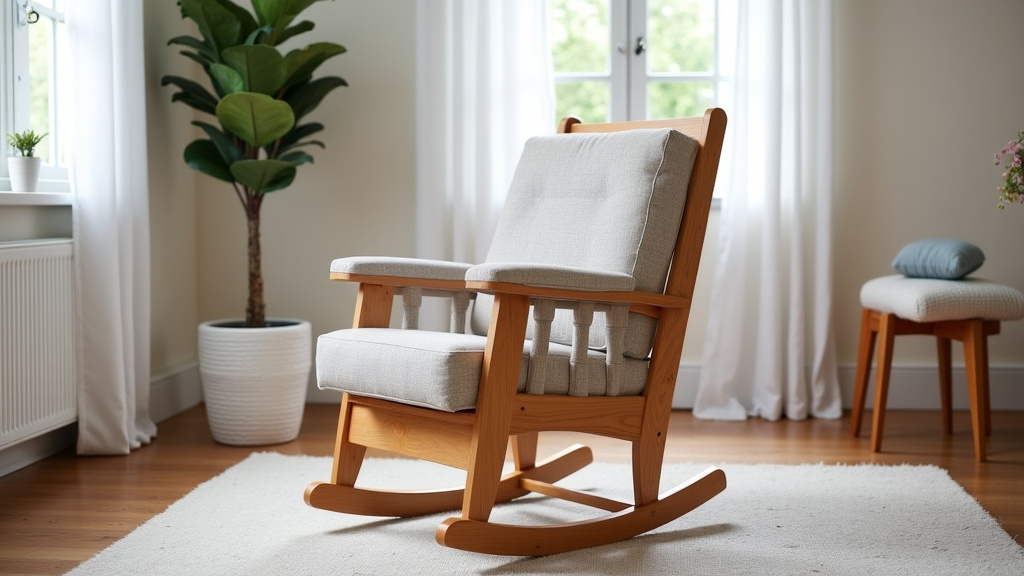
The frame is the backbone of your glider. Most quality gliders are built with sturdy hardwood or metal frames. A solid wood frame often provides excellent stability and durability. Metal frames can also be very strong and are sometimes used in more modern designs.
When checking the frame, look for solid construction. Avoid chairs that feel flimsy or wobbly. The mechanism for the glide should also feel smooth and secure. Many manufacturers will specify the type of wood or metal used, so pay attention to those details. We found that investing in a well-built frame means your glider will last for years, perhaps even through multiple children.
Choosing the Right Glider for Your Nursery
Selecting the right nursery glider is a personal decision, but keeping a few key things in mind can help. It’s about finding that perfect blend of comfort, style, and functionality for your specific needs and space.
Size and Space Considerations
Nursery gliders come in various sizes. Before you fall in love with a particular model, measure your nursery space. You need to ensure the glider will fit comfortably without making the room feel cramped. Pay attention to the glider’s dimensions, especially its depth and width, and make sure there’s enough clearance for the gliding motion.
Also, consider the size of the ottoman if it’s included. Will it tuck neatly beside the chair when not in use? Or does it require significant floor space? We suggest looking at the glider’s footprint and thinking about how it will integrate into your existing furniture layout.
Style and Decor Matching
Your nursery glider can be a beautiful addition to your baby’s room. They come in a wide array of styles, from classic to modern. Think about the overall aesthetic you’re aiming for in your nursery. Do you prefer plush and traditional, or sleek and minimalist?
Consider the color palette of your nursery. You might want a glider that blends in with your chosen theme or one that acts as a stylish accent piece. Many brands offer swatches of their upholstery materials, which can be helpful for color matching. We found that choosing a glider that you find aesthetically pleasing can make your nursery feel even more inviting.
Here’s a quick checklist to help you remember what to look for:
- Smooth, controlled gliding motion.
- Comfortable padding and good back support.
- Durable, easy-to-clean upholstery.
- Sturdy frame construction for stability.
- Appropriate size for your nursery space.
- Matching ottoman for added comfort (optional but recommended).
Conclusion
You’ve learned that a nursery glider is more than just a rocking chair. It offers a smooth, controlled gliding motion designed for your comfort. Many models include helpful features like lumbar support and ottomans, making feeding and comforting your baby a more pleasant experience. Remember to consider the materials and construction for durability and ease of cleaning. Take your time to find a glider that fits your nursery space and your personal style.
Your next step is to measure your nursery and start browsing models that fit your needs. Look for quality construction and features that will make those precious parenting moments even more comfortable for you.
Frequently Asked Questions
Are nursery gliders worth the cost?
Many parents find nursery gliders to be a worthwhile investment for their comfort and convenience during the baby’s early years. The enhanced support and smooth motion can make a big difference during long nights. We’ve found that the durability of a well-made glider means it can often be used for multiple children.
Can I use a glider for a toddler?
Absolutely. While designed with babies in mind, a glider’s comfort and support are beneficial for toddlers too. They are perfect for reading bedtime stories or simply cuddling with your little one. We’ve seen many families continue to use their gliders long after the baby stage.
How do I clean my nursery glider?
Cleaning depends on the upholstery. For fabric gliders, check the manufacturer’s care tag. Often, spot cleaning with mild soap and water is recommended. Faux leather gliders are typically easy to wipe down with a damp cloth. We suggest having a stain remover handy for accidental spills.
What’s the difference between a glider and a recliner?
A glider moves back and forth on a track in a smooth, controlled motion. A recliner, on the other hand, typically tilts back and may have a footrest that extends. Some gliders also offer reclining features, but their primary movement is gliding. We found that the gliding motion is often preferred for its gentleness.
Do I really need an ottoman with a glider?
While not strictly necessary, a matching ottoman significantly enhances comfort. It allows you to elevate your feet and achieve a more relaxed posture, which is wonderful during feeding or quiet time. We’ve heard from many parents that the ottoman makes the glider experience much more enjoyable.