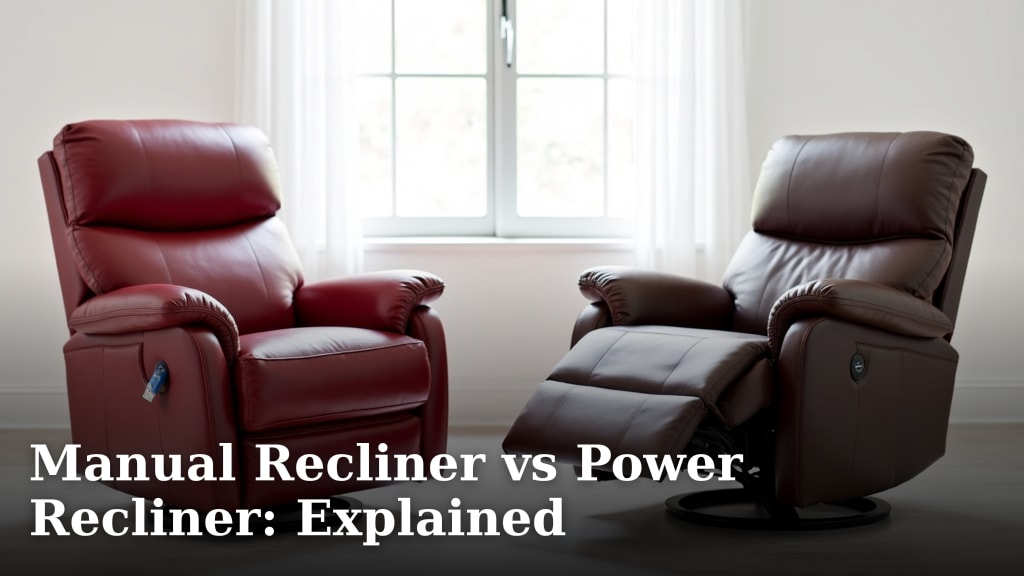
Manual Recliner vs Power Recliner: Explained
When choosing between a manual recliner and a power recliner, neither is definitively “better”; the best choice depends entirely on your personal needs and budget. Manual recliners offer simplicity and affordability, while power recliners provide convenience and advanced features. We found that understanding these core differences helps shoppers make a confident decision.
A manual recliner operates with a simple pull-lever or push-back mechanism, making it easy to use without electricity. Power recliners, on the other hand, use a motor to recline and often come with extra perks like USB ports and massage functions. Many people appreciate the straightforward operation of manual versions, while others find the effortless adjustments of powered models a worthwhile upgrade.
- Manual recliners are simpler and typically cheaper.
- Power recliners offer easy adjustments and extra features.
- Your comfort and budget should guide your choice.
- Consider ease of use and any desired luxury options.
Let’s walk through the key distinctions between manual and power recliners so you can find the perfect fit for your living room.
Understanding Your Recliner Options: Manual vs. Power
Choosing the right recliner can really transform your living space. You might be wondering about the key differences between manual and power recliners. We’ve looked into it, and the main distinction boils down to how you operate the reclining mechanism. Manual recliners use your body’s own movement and a lever, while power recliners rely on electricity and a motor. This fundamental difference impacts cost, convenience, and the features you’ll find. Let’s break down each type to help you decide what works best for your home and lifestyle.
The Simplicity of Manual Recliners
Manual recliners are known for their straightforward design and ease of use. They don’t require any electricity, making them a reliable choice for any room, even without nearby outlets. You’ll find two main ways these operate, and understanding them can help you pick the perfect one for you.
Push-Back Recliners: Your Body is the Motor
Push-back recliners are perhaps the simplest type. To recline, you just lean back with your body weight. There’s no lever to pull or buttons to press. They usually have a few reclining positions, and you simply shift your weight to find your sweet spot. This makes them great for people who enjoy a hands-on approach to comfort. Many shoppers appreciate their intuitive operation and the lack of complex parts.
Lever-Operated Recliners: A Gentle Pull
Lever-operated manual recliners use a handle or small lever, typically located on the side of the chair. To recline, you give the lever a firm pull. To return the chair to its upright position, you’ll usually push the footrest back with your legs while leaning forward. These offer a bit more control over the reclining angle compared to push-back models. They are a popular choice for those who want a little mechanical assistance without venturing into powered territory.
Pros of Manual Recliners
- Lower Cost: Generally, manual recliners are more affordable than their power counterparts. This makes them a great option if you’re on a tight budget.
- No Electricity Needed: You can place them anywhere in your room, no need to worry about finding an electrical outlet. This offers design flexibility.
- Simple to Use: The mechanisms are easy to understand and operate, making them accessible for most people.
- Durability: With fewer electronic parts, there’s often less to go wrong, potentially leading to a longer lifespan.
Cons of Manual Recliners
- Requires Effort: You need to use your own strength to recline and return the chair. This might be challenging for individuals with limited mobility or strength.
- Limited Positions: You typically have fewer reclining positions to choose from compared to power recliners.
- Less Convenient: Adjusting to a precise position can be a little less smooth than with powered models.
The Convenience of Power Recliners
Power recliners take comfort to another level with Power recliners take comfort to another level, and you might be interested in learning about a zero gravity recliner.electric-powered adjustments. With the push of a button, you can change the position of your recliner. This makes them ideal for anyone seeking ultimate ease and comfort. They can also come with a variety of extra features that enhance the lounging experience.
How Power Recliners Work
Power recliners use an electric motor to move the reclining mechanism. They plug into a standard wall outlet. A hand-held remote or buttons integrated into the chair’s armrest control the motor. You simply press a button to lean back or bring the footrest up. Reversing the process is just as easy. Many shoppers love how effortless it is to find their perfect position.
Features You Might Find on Power Recliners
- Adjustable Headrests: Many power recliners offer adjustable headrests, allowing you to support your neck and head precisely.
- Lumbar Support: Some models include powered lumbar support, which can be adjusted to provide targeted back relief.
- USB Ports: Keep your devices charged while you relax. Many power recliners include convenient USB ports.
- Massage and Heat: For a truly luxurious experience, some chairs offer built-in massage and heating functions.
- Zero-Wall Clearance: Some designs are engineered to be placed very close to a wall, saving you space.
Pros of Power Recliners
- Effortless Operation: No physical strength is needed to recline or return the chair to an upright position. This is a major plus for many users.
- Precise Adjustments: You can stop the chair at any angle, giving you total control over your comfort level.
- Ease of Use for All: Ideal for seniors, people with physical limitations, or anyone who simply prefers convenience.
- Advanced Features: The option for added perks like heat, massage, and USB charging can significantly enhance your relaxation.
Cons of Power Recliners
- Higher Cost: Power recliners are typically more expensive than manual ones due to the motor and electronic components.
- Requires Electricity: You need a power outlet nearby, which can limit where you place the chair in your room.
- More Complex: More parts mean more potential for mechanical or electrical issues over time.
- Can Be Noisy: The motor might produce some noise when operating, though many newer models are quite quiet.
Key Differences at a Glance
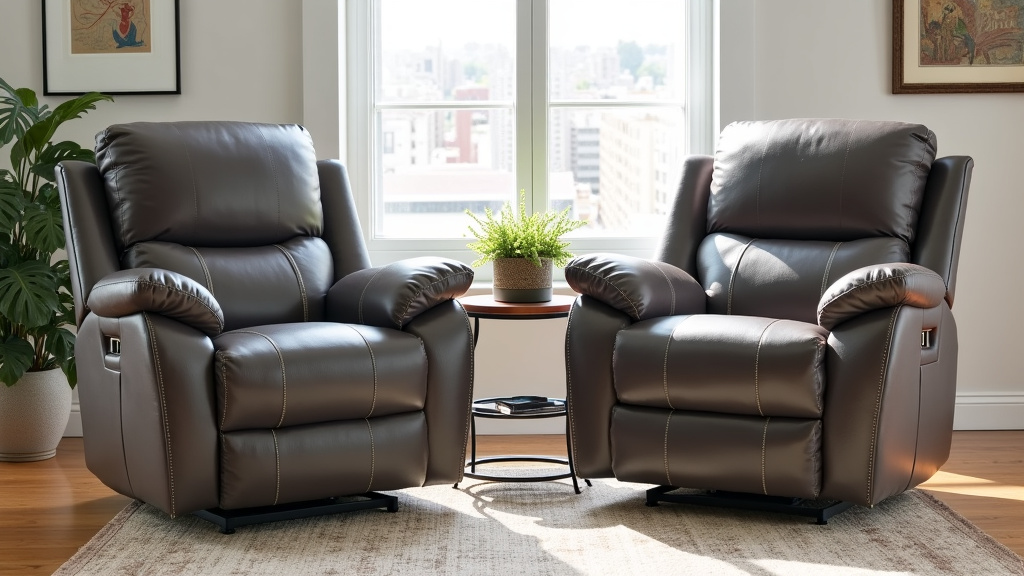
To help you visualize the differences, consider this quick comparison. We found that understanding these core aspects can make your decision much clearer.
| Feature | Manual Recliner | Power Recliner |
|---|---|---|
| Operation | Lever or push-back mechanism | Electric motor with buttons/remote |
| Power Source | Human effort | Electricity (plugs into wall) |
| Cost | Generally lower | Generally higher |
| Ease of Use | Requires some strength | Effortless, push-button control |
| Placement Flexibility | High (no outlet needed) | Limited by outlet proximity |
| Additional Features | Rare | Common (USB, heat, massage) |
| Maintenance | Simpler mechanics | More complex, potential for electronic issues |
Making Your Choice: What to Consider
So, which type of recliner is right for you? It really comes down to your personal circumstances and preferences. Think about these points as you weigh your options. We’ve found that asking yourself these questions can lead to a really satisfying purchase.
Who Will Be Using the Recliner?
If the recliner is for someone who has difficulty with physical exertion or has mobility issues, a power recliner is likely the better choice. The effortless operation can make a huge difference in their daily comfort. For active individuals who don’t mind a little effort, a manual recliner can be perfectly suitable and more budget-friendly. Many experts at the Cleveland Clinic suggest that assistive devices should prioritize ease of use for the intended user.
What’s Your Budget Like?
Manual recliners are typically less expensive. If you’re looking for a comfortable place to relax without a big investment, a manual option is a solid choice. Power recliners, with their motors and added features, naturally cost more. You’ll need to decide if the added convenience and features are worth the extra expenditure for your household.
Where Will the Recliner Go?
Consider the placement of the recliner. Do you have an electrical outlet conveniently located near where you plan to put the chair? If not, a manual recliner offers much more flexibility. You won’t be tethered to a wall socket, allowing you to position it in a corner or in front of a window more easily.
Do You Want Extra Features?
Are you someone who enjoys little luxuries? If you’re dreaming of heated seats, a gentle massage, or the convenience of charging your phone right from your chair, a power recliner is likely your path. Manual recliners generally stick to the basic function of reclining and don’t offer these add-ons.
Your Personal Preference for Operation
Ultimately, it’s about what feels best to you. Do you enjoy the tangible feel of a lever and the physical act of reclining? Or do you prefer the smooth, quiet glide of an electric motor at the touch of a button? We’ve spoken with many shoppers who find that trying both types in a showroom can be incredibly helpful in making this personal call.
Quick Checklist for Your Decision:
- Assess your budget for the purchase.
- Consider who will use the chair most often.
- Determine if you need power outlet access.
- Think about desired features like heat or massage.
- Try out both manual and power options if possible.
- Prioritize ease of use and comfort for your lifestyle.
Conclusion
Choosing between a manual and power recliner ultimately comes down to what matters most to you. If budget and placement flexibility are your top priorities, a manual recliner offers reliable comfort with simple operation. For those seeking effortless adjustments, added comfort features like heat and massage, and the convenience of charging devices, a power recliner is likely the better investment. We found that considering who will use the chair and their specific needs is key. Now that you understand the differences, take a moment to try out both types if you can, and make the choice that brings you the most comfort and relaxation in your home.
Frequently Asked Questions
Can I place a power recliner anywhere in a room?
You can place a power recliner anywhere you like, as long as there’s an electrical outlet nearby to plug it in. If you don’t have an outlet within reach, you might need to consider an extension cord or a manual recliner for more placement flexibility.
Are manual recliners harder to use than power recliners?
Manual recliners require some physical effort to recline and return to an upright position using a lever or your body weight. Power recliners use a motor, so they are effortless to operate with just the push of a button, which can be easier for individuals with limited mobility.
Which type of recliner is more durable?
Generally, manual recliners tend to be more durable because they have fewer mechanical and electronic parts that can wear out or break. Power recliners have motors and wiring, which could potentially require repair or replacement over time.
Do power recliners make a lot of noise?
Most modern power recliners are designed to operate relatively quietly. While you might hear a low hum or motor sound as they adjust, it’s usually not disruptive. Older models or less expensive ones might be a bit louder.
What happens if the power goes out when I’m in a power recliner?
Many power recliners have a battery backup system that allows you to return the chair to its upright position even during a power outage. Some models may also have a manual override or a release lever for emergencies.