Types of Recliner Chairs: Which Should You Choose?
The main types of recliner chairs are push-back, manual lever, power, wall-hugger, rocker, glider, lift, and zero-gravity styles. Choose by how you want to recline, how much floor space you have, and whether you want motion beyond leaning back.
On this page (10 sections)
- What are the main types of recliner chairs?
- How do push-back and manual lever recliners differ?
- How does a power recliner work?
- Does a wall-hugger recliner save space?
- What is the difference between rocker and glider recliners?
- What is a lift recliner?
- What does zero-gravity mean in a recliner?
- How should you choose among types of recliner chairs?
- Which recliner type should you choose?
- About these recliner chair types
The main types of recliner chairs include push-back, manual lever, power, wall-hugger, rocker, glider, lift, and zero-gravity styles. Choose by how you want to recline, how much room you have, and whether you want the chair to rock or glide too.
Some names describe a mechanism, while others describe the chair's movement or shape. A chair can belong to more than one group, such as a power wall-hugger recliner.
Start with the way you want to change positions, then check the chair's fit and motion. Our simple guide to choosing a recliner covers measurements and comfort details to check before you buy.
What are the main types of recliner chairs?
Recliners differ in how they move, how you control them, and how much room they need. This table gives you a quick way to narrow the options.
| Type | How it works | Consider it if |
|---|---|---|
| Push-back | You lean back to move the chair | You prefer a simple mechanism without a lever |
| Manual lever | A handle releases or adjusts the recline | You want direct control without a motor |
| Power | A motor moves the chair with controls | You prefer powered position changes |
| Wall-hugger | The chair moves forward as it reclines | You have limited space behind the chair |
| Rocker | The chair rocks, often while upright | You want a rocking motion as well |
| Glider | The chair moves back and forth along a track | You want a smooth gliding motion |
| Lift | A powered mechanism tilts the seat to assist standing | Getting up from a seated position is a key concern |
| Zero-gravity | The chair reclines into a raised-leg position | You want an outdoor lounge-style recline |
These labels can overlap. For example, a recliner may be both power-operated and designed to sit close to a wall.
Check the chair's full dimensions and movement instructions before deciding. A name alone does not tell you how far the back or footrest extends.
How do push-back and manual lever recliners differ?
A push-back recliner moves when you lean back, while a manual lever model uses a handle to release or control the reclining parts. Both avoid a powered motor, but the control feels different.
With push-back designs, your body weight starts the movement. This can mean fewer controls to manage, though you may need enough strength and range of motion to recline and return upright comfortably.
A manual lever gives you a handle to operate the recline. The exact action varies by chair, so check whether the footrest opens separately and whether the back can be set at multiple angles.
Choose between them by trying the control if possible, or by checking the maker's instructions. If the person using the chair has limited strength or mobility, include that in the decision.
How does a power recliner work?
A power recliner uses a motor and controls to change the chair's position. Depending on the design, separate controls may adjust the back and footrest.
Powered movement can be useful if you find a manual handle hard to operate. It does require a power source, and the control placement should be easy for the main user to reach.
Some models also include a lift function, but a power recliner does not automatically lift the seat. Read the chair's description carefully to confirm which movements it offers.
For brand-specific examples, compare MCombo recliner options, CHITA recliner chairs, or ANJ recliner chairs. Focus on each chair's controls and dimensions, then match those details to the user and room.
Does a wall-hugger recliner save space?
A wall-hugger recliner is designed to recline with less space behind it than many standard recliners. Its seat often moves forward as the back reclines.
The name does not mean you can push every model flush against the wall. Check the required clearance and total depth in both upright and reclined positions.
Measure from the wall to the chair's front edge, then mark the area it may occupy when open. Also leave enough room to walk around it and use nearby doors or furniture.
What is the difference between rocker and glider recliners?
A rocker recliner moves with a rocking motion, while a glider travels back and forth along a track. Both add movement beyond reclining, but the feel and motion path are different.
A chair may rock or glide while upright, recline separately, or combine these actions. Confirm how the chair moves and whether the motion can be locked when you want it to stay still.
Gliders are common in nursery seating, sometimes paired with a separate ottoman. The Storkcraft Premium Hoop Glider & Ottoman has smooth-gliding movement, padded arm cushions with side pockets, and a solid wood frame.
What is a lift recliner?
A lift recliner uses a powered mechanism to tilt the seat upward, helping the user move from sitting toward standing. It can also recline, but the lift function is its defining feature.
Check the chair's fit, controls, and intended user before choosing one. Seat height, arm position, and the space around the chair all affect whether the movement will be practical.
A lift chair is not the same as every power recliner. If the main need is help standing, confirm that the model includes a lift function instead of assuming the motor provides it.
For more detail on matching a chair to someone else's needs, see how to choose a recliner for an elderly parent.
What does zero-gravity mean in a recliner?
A zero-gravity chair reclines into a position with the legs raised, creating a laid-back lounge posture. The term describes the position, not a promise about health or weightlessness.
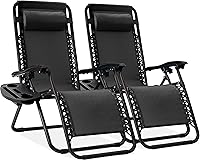
Some zero-gravity chairs are lightweight outdoor loungers rather than upholstered living-room furniture. The Best Choice Products Zero Gravity Chairs Recliner is a foldable outdoor pair with a lockable reclining system, detachable tray, and adjustable headrests.
Check the chair's open and folded dimensions, weight capacity, and intended setting. For this model, the open length varies from 32.5 to 61 in, and its listed capacity is 250 lb.
How should you choose among types of recliner chairs?
Choose among types of recliner chairs by matching the movement to your routine and the chair to your space. The control you can use comfortably matters as much as the chair's style.
Use these steps to narrow your choice:
- Decide whether you want a manual control or a motorized one.
- Measure the room and check the chair's reclined footprint and wall clearance.
- Decide whether rocking, gliding, or a lift function would help.
- Check seat dimensions, arm height, and how easy it is to sit down and rise.
- Confirm the chair's intended setting, such as indoor living space or outdoor use.
If you're unsure about size or comfort, start with our recliner choosing guide. A proper fit depends on the person and the room, not just the mechanism.
A blood pressure monitor is not a recliner, so it does not help compare chair types or seating needs. We don't recommend it for this guide.
Which recliner type should you choose?
Pick a push-back or manual lever chair if you want a non-motorized recline and can operate its movement comfortably. Choose power when you prefer button controls, and consider a wall-hugger if the room has little space behind the chair.
Choose a rocker or glider when you want additional motion, a lift chair when standing assistance is the main need, or a zero-gravity lounger for an outdoor raised-leg recline. Before deciding, compare the chair's full fit and movement with your space and routine.
For extra comfort after choosing your chair, read lumbar roll or cushion guidance. If you want more brand options, compare CANMOV recliners, Best Home Furnishings recliners, and Southern Motion recliners.
About these recliner chair types
We compared common recliner mechanisms and chair styles to explain how they differ.
Frequently asked questions
What are the main types of recliner chairs?
The main types include push-back, manual lever, power, wall-hugger, rocker, glider, lift, and zero-gravity chairs. Some names describe how the chair reclines, while others describe its motion or shape, so one chair can fit more than one type.
Are power recliners better than manual recliners?
Power recliners use a motor and controls to move the chair, while manual models rely on your body weight or a lever. Power can make position changes easier, but it needs a power source and may have more parts.
Choose based on the controls and setup you prefer.
What is the difference between a rocker and a glider recliner?
A rocker moves along a curved path with a rocking motion, while a glider moves back and forth along a track. Some recliners combine reclining with rocking or gliding, so check the chair's motion and whether it can recline at the same time.
What type of recliner is best for a small room?
A wall-hugger or zero-clearance recliner may suit a small room because these designs are made to recline closer to a wall than many standard chairs. Check the required wall gap and full chair dimensions, then mark the chair's footprint before choosing.
What should an older adult consider when choosing a recliner?
Consider seat height, arm support, controls, the effort needed to recline, and how easily the person can sit down and stand up. A lift chair may help with the transition, but fit and safe use depend on the individual.
Read our guide to choosing a recliner for an elderly parent.