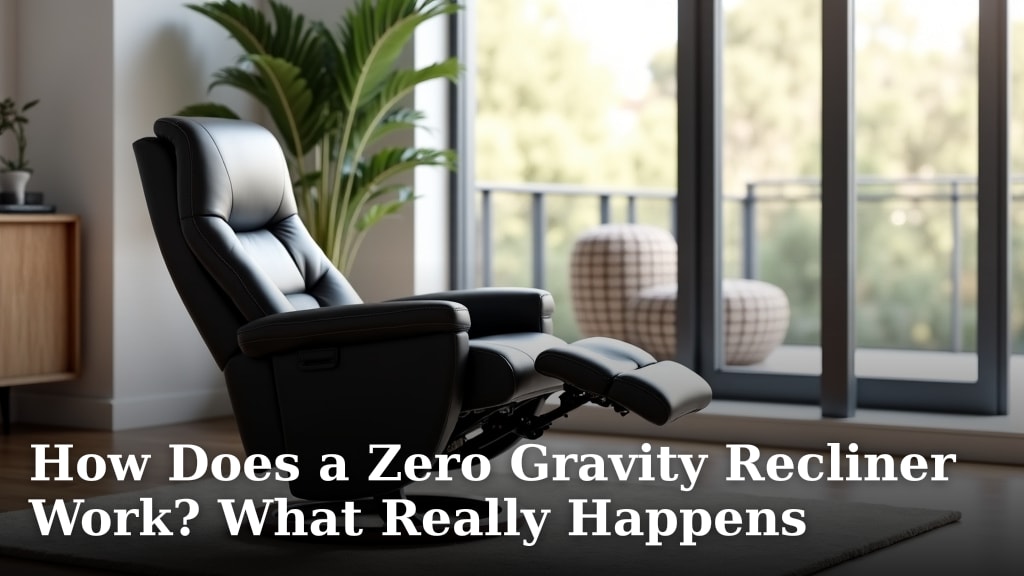
How Does a Zero Gravity Recliner Work? What Really Happens
A zero gravity recliner works by using a series of precisely engineered motors. These motors tilt the chair to a specific angle, lifting your legs above your heart. This redistributes your body weight, relieving pressure points and creating a feeling of weightlessness. It mimics the position astronauts assume in space.
This special reclining position isn’t just for comfort. It’s designed to reduce stress on your spine and improve circulation. Many users report a sense of deep relaxation. We found that the precise angle is key to achieving the zero gravity effect.
- Zero gravity recliners use motors to tilt.
- They lift your legs higher than your heart.
- This position relieves pressure and feels weightless.
- It’s designed to help your spine and blood flow.
Ready to understand what makes these chairs so unique? Let’s dive into the mechanics and the science behind that blissful floating feeling.
Understanding the Mechanics of Zero Gravity Recliners
So, what’s really going on when you sink into a zero gravity recliner? It’s all about a clever combination of engineering and physics. These chairs don’t actually defy gravity. Instead, they cleverly rearrange your body’s position relative to it. They do this using a precise system of motors and a well-thought-out design. The goal is to make you feel lighter and more relaxed.
The Role of Motors and Tilt Mechanism
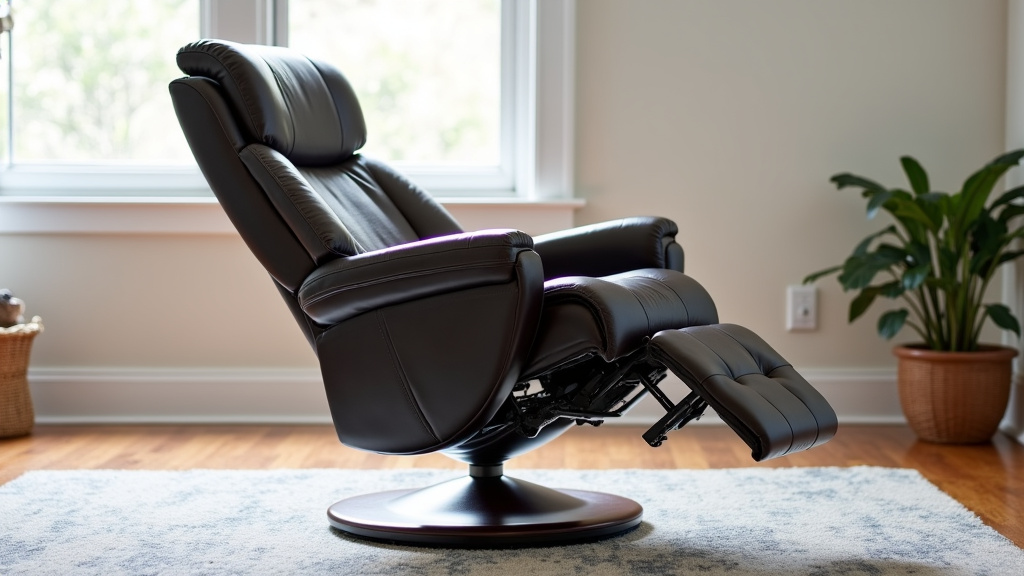
The magic starts with the chair’s motors. Most zero gravity recliners have at least two motors. One motor typically controls the backrest recline. The other motor manages the leg rest elevation. More advanced models might have more motors for finer adjustments. These motors work together. They carefully tilt the entire seating area backward. This tilt is not just a simple lean. It’s a synchronized movement. This coordinated action is key to achieving the zero gravity effect.
Think of it like a seesaw. As the back goes down, the legs go up. But it’s more controlled than a playground seesaw. The motors move slowly and smoothly. This prevents any sudden jerks. You can usually control the tilt with a remote. This lets you find your perfect sweet spot. You’re essentially adjusting the angle of your body. This angle is designed to achieve a specific state of relaxation.
The Science of Body Weight Redistribution
The primary goal of this tilting motion is to redistribute your body weight. When you sit upright, gravity pulls down on your body. This puts pressure on your feet, legs, and spine. It also forces your heart to work harder to pump blood upwards. The zero gravity position changes this. It lifts your legs. Your legs are raised to an angle where they are higher than your heart. This is a critical element.
When your legs are elevated above your heart, gravity helps. It assists blood flow back towards your core. This reduces the workload on your circulatory system. Your body no longer has to fight gravity as much. It feels as though your weight is spread out evenly. This even distribution eases pressure points. Common areas that feel relief include your lower back and hips. Many users report a feeling of being “unburdened.”
Mimicking Astronaut Positioning
The term “zero gravity” comes from NASA. Astronauts in space experience true weightlessness. When they are in orbit, they float. Their bodies are not subjected to Earth’s gravity. This allows their muscles and spine to relax completely. NASA found that a specific reclining position was beneficial for astronauts. This position helps minimize stress on their bodies during launch and re-entry.
This NASA-inspired position is what zero gravity recliners aim to replicate. It’s not about achieving actual weightlessness. It’s about adopting a body posture that mimics the *feeling* and *benefits* of that state. The chair reclines you to an angle where your body is supported. Your limbs are positioned to reduce gravitational stress. This mimics how astronauts’ bodies naturally align in space.
What Happens to Your Body in This Position?
Now, let’s look at what actually happens inside your body when you recline. It’s more than just feeling comfy. There are physiological changes that contribute to the relaxation. You might not even notice them consciously. But your body is certainly responding.
Reduced Spinal Compression
Your spine has natural curves. When you stand or sit, gravity compresses the discs between your vertebrae. This compression can lead to discomfort or pain over time. The zero gravity position significantly reduces this compression. By lifting your legs and tilting your torso, you open up the spaces in your spine. Your vertebrae are no longer bearing your full body weight directly downwards.
Research has shown that this position can distribute pressure more evenly across your back. It helps decompress the lumbar region, which is often under strain. Think of it like letting air out of an over-inflated balloon. Your spine gets a chance to relax and recover. Many people with back pain find relief. We found that this spinal decompression is one of the most cited benefits.
Improved Blood Circulation
As we mentioned, the elevated leg position is key. When your legs are lower than your heart, gravity works against your blood returning to your heart. This can cause blood to pool in your legs and feet. It can also make your heart pump harder to get oxygenated blood where it needs to go.
In the zero gravity position, your legs are above your heart. This makes it easier for blood to flow back to your heart. This improved circulation can have several positive effects. It can help reduce swelling in your legs and feet. It may also help lower blood pressure. Some studies suggest better circulation can lead to improved oxygenation of your tissues. The Cleveland Clinic notes that elevating the legs can help reduce venous pressure.
Muscle Relaxation
When you’re in a neutral sitting or standing position, certain muscles are constantly engaged. They work to keep you upright and balanced. Your back muscles, for example, are always working. Your leg muscles also maintain tension.
The zero gravity recliner allows these muscles to relax. When your body is fully supported and your weight is distributed, there’s less need for muscular effort. Your back muscles can release tension. Your legs don’t have to work against gravity. This deep muscle relaxation is a major contributor to the feeling of calm. Many users describe feeling “boneless” or completely loose.
What About Breathing?
This might seem like a small point, but it’s important. When you sit or stand, your diaphragm can be somewhat compressed. This can subtly affect your breathing. When you recline in a zero gravity chair, your abdominal organs shift slightly. This shift can give your diaphragm more room to move. This allows for deeper, more relaxed breaths.
Taking deeper breaths can have a calming effect on your nervous system. It’s a principle used in many relaxation techniques. So, while you might just feel more comfortable, your breathing might also be improving. This can contribute to that overall sense of well-being.
Key Features That Enable the Effect
Not all recliners are created equal. To truly achieve that zero gravity feeling, certain design elements are essential. These features work together to create the supported, weightless sensation.
Precise Angle of Recline
The specific angle is not arbitrary. It’s carefully calculated. Many experts point to an angle of roughly 120 degrees. This is the angle between your torso and your thighs. It’s also about the angle between your thighs and your calves. This precise positioning is what allows for that ideal weight redistribution.
Too little recline, and you won’t get the full spinal decompression. Too much recline, and you might feel unstable or unsupported. The best chairs allow for fine-tuning. You can adjust the tilt to find the angle that feels best for your body. We found that a range of adjustment is more helpful than a single fixed position.
Full Body Support
A good zero gravity recliner cradles your entire body. This means ample padding and ergonomic design. The chair should support your head and neck. It should also support your lower back. Your legs and feet should be properly elevated and supported by the footrest.
Without full body support, you might find yourself straining. You might try to prop yourself up with your arms or adjust your position constantly. This defeats the purpose of relaxation. The design should distribute your weight evenly across the chair’s surface. This prevents any one area from bearing too much pressure.
Smooth Transition Between Positions
We’ve touched on this, but it bears repeating. The motors need to be smooth. A jerky transition can be jarring. It can pull you out of that relaxed state. High-quality motors are essential for a pleasant experience.
When you change positions, it should feel effortless. You should be able to move from an upright position to full recline and back again without any struggle. This smooth operation is a hallmark of a well-made zero gravity recliner.
Understanding Different Models
It’s worth noting that “zero gravity” can be a broad term. Some chairs offer a more basic tilt. Others have advanced features like independent leg and back adjustments. Some even have built-in massagers or heating elements.
Consider what you want most from your chair. Are you looking for the pure spinal relief? Or do you want a full spa-like experience? The core zero gravity function relies on the tilt and leg elevation. Additional features can enhance comfort but aren’t strictly necessary for the basic effect.
Here’s a quick checklist to remember what makes it work:
- Motors that control tilt and leg rest.
- Legs raised higher than the heart.
- Body tilted to a specific, comfortable angle.
- Spine decompressing due to reduced pressure.
- Muscles relaxing because of support.
- Improved blood flow assisting circulation.
Conclusion
You’ve learned how zero gravity recliners use motors to tilt your body. This precise engineering lifts your legs above your heart. This simple change redistributes your weight. It relieves pressure on your spine and improves blood flow. The feeling of weightlessness comes from this body alignment. It mimics the ideal posture astronauts experience. Now that you understand the mechanics, consider what type of zero gravity recliner best fits your needs for ultimate relaxation and spinal relief.
Frequently Asked Questions
Are zero gravity chairs good for back pain?
Yes, many people find zero gravity chairs helpful for back pain. The reclined position reduces compression on your spine. This can relieve pressure on discs and muscles. We found that consistent use often leads to reported comfort.
Do zero gravity chairs actually make you feel weightless?
While they don’t make you truly weightless, they create a sensation of it. By lifting your legs and tilting your torso, your body weight is evenly distributed. This redistribution reduces the feeling of strain. It mimics the supportive feeling astronauts have in space.
How long should you sit in a zero gravity recliner?
You can sit in a zero gravity recliner for extended periods, often 30 minutes or more. Listen to your body; if you feel comfortable, you can relax longer. Some users find it beneficial for naps. Others use it for reading or watching TV.
Can zero gravity recliners help with circulation problems?
Yes, the elevated leg position is beneficial for circulation. When your legs are higher than your heart, gravity assists blood flow back to your core. This can help reduce swelling and improve overall circulatory function. The Cleveland Clinic also notes this benefit.
What’s the main difference between a basic recliner and a zero gravity one?
A basic recliner simply tilts backward. A zero gravity recliner uses motors for a more precise, synchronized tilt. This tilt elevates your legs above your heart. This specific posture is designed for spinal decompression and weight redistribution, which a standard recliner doesn’t achieve.