
How Does a Lift Chair Work? What to Expect
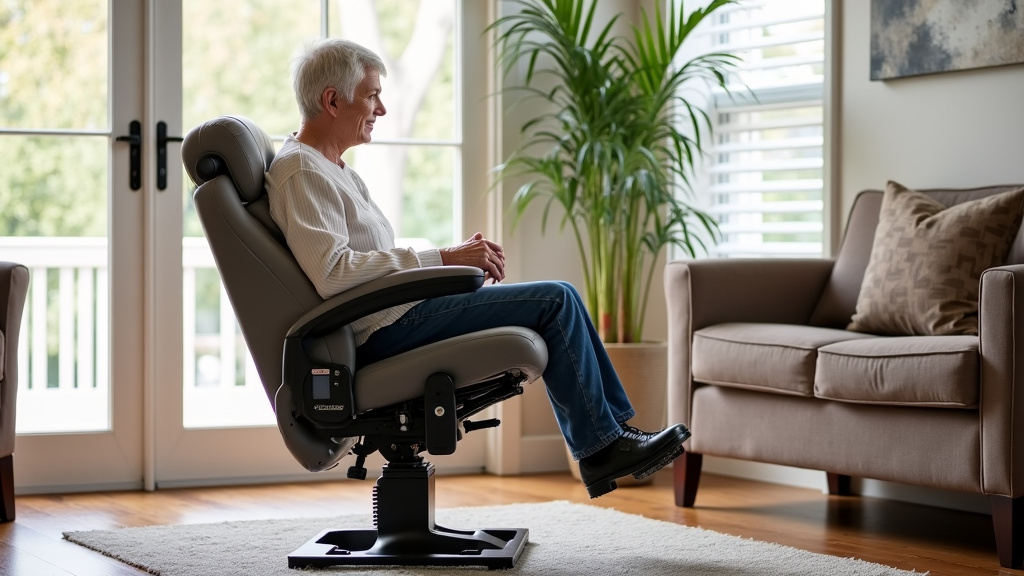
A lift chair works by using a powered electric motor connected to a scissor mechanism under the seat. When you press a button on the remote, the motor pushes or pulls the frame, smoothly tilting the chair forward to help you stand up or reclining it back for comfort.
Most models use a quiet, reliable motor and a simple hand control, often with just two or three buttons. We found that the key difference between chairs is their lifting strength and range of motion, so it’s good to know what to expect from the mechanism itself.
- A motor under the seat powers the entire motion.
- A simple remote control operates the lift and recline functions.
- The chair uses a metal frame to tilt forward and help you stand.
- It can also recline back for resting, and some have heat or massage.
- Most plug into a standard wall outlet for power.
Below, we break down exactly what happens when you press a button and how to choose a chair with the right strength and features for your needs.
Understanding the Lifting Mechanism Inside and Out
At its core, a lift chair’s magic comes from a strong, simple system. Think of it as a powerful, gentle hand that pushes you upward. When you press the “up” button, you’re starting a chain reaction. A quiet electric motor turns on. It pushes a metal arm. That arm is connected to a sturdy frame under your seat. This frame then tilts the entire chair forward. The motion is smooth, not sudden. It slowly moves you from sitting to a near-standing position. This gives your legs time to engage and support your weight.
According to the National Institute on Aging, having a stable support for standing up can greatly reduce the risk of falls. The mechanism provides exactly that stability. You control the speed with your finger. You can stop at any point that feels right for you.
The Two Main Types of Lift Chair Motion
Not all lift chairs move the same way. The difference is important for comfort and mobility. We found that the two primary styles are defined by how they lift you.
Traditional Lift & Recline
This is the most common type. It does two main things. First, it lifts you up to help you stand. Second, it reclines back for resting or sleeping. The footrest comes out as the back goes down. Think of a recliner that also stands you up. It’s a versatile two-in-one. Many experts say this style works well for most people who need help standing.
Lift-Only or Stand-Aid Chairs
This style focuses on one job: helping you stand. It may have a simple tilt or a vertical lift. The seat moves up and forward without reclining. It’s like having a raised seat that comes to meet you. These are often better for people who don’t need to lie flat. They can also work in tighter spaces where a full recline isn’t possible.
What You’ll Actually See and Use
When you look at a lift chair, a few parts stand out. The If you want to understand similar components, our guide to the parts of a recliner details each element.heavy-duty metal frame is underneath. You won’t see it during normal use. The seat is often a little deeper and firmer than a regular chair. This is to support the mechanism and provide a solid base. The most important part for you is the remote control.
Decoding the Hand Control Buttons
Don’t worry, the remote is usually very simple. It’s designed to be easy, even if your dexterity isn’t perfect. We found that most controls follow a similar pattern.
- Up Arrow / Stand Button: Presses and holds to lift the chair and tilt you forward.
- Down Arrow / Recline Button: Presses and holds to lower the seat or recline the back.
- Stop Button (sometimes): Lets you pause the motion exactly where you want it.
Some advanced models have more buttons for independent control. You might find separate controls for the backrest and the footrest. This lets you find a custom position, like sitting upright with your feet up.
Power, Strength, and What It Can Lift
A lift chair is only as good as its motor and frame. The motor’s power determines how smoothly it lifts. The frame’s weight capacity is a critical safety number. Always check the manufacturer’s stated weight limit. Exceeding it can damage the chair and is unsafe.
| Lifting Style | Best For | Considerations |
|---|---|---|
| Traditional Lift & Recline | Users who need help standing AND want to rest/sleep in the chair. | Requires more space to recline. Wider range of positions. |
| Lift-Only (Stand-Aid) | Users who primarily need help standing. Those with limited space. | May not go to a full recline. More compact footprint. |
| Infinite Position / Zero Gravity | Users seeking maximum comfort and customizable positions, like elevating the legs above the heart. | Typically more expensive. Has two motors for independent control. |
The “lift capacity” isn’t just about total weight. It’s also about the motor’s torque. A good motor will lift smoothly, even near its maximum capacity. A weaker motor might sound strained or move jerkily. The frame is usually made of steel. Look for sturdy welds and a wide, stable base that won’t wobble.
Features That Go Beyond Lifting
While lifting is the main job, many chairs offer extra comforts. These can make a big difference in daily use. Remember, you don’t need these, but they are nice to have.
Heat and Massage Functions
Some chairs have built-in heating pads in the back and seat. Gentle warmth can soothe aching muscles and stiffness. Massage nodes might roll or vibrate. According to the Cleveland Clinic, heat therapy can be beneficial for chronic pain and relaxation. It’s like getting a warm, gentle massage while you read or watch TV.
Battery Backup Systems
What happens if the power goes out? A battery backup pack is a key feature for safety. It’s usually an optional add-on. If the power fails, a charged battery allows you to lower the chair to a safe, flat position. It ensures you won’t be stuck in a tilted or raised position. We strongly recommend this option if you live in an area with frequent storms or outages.
Upholstery and Style
Gone are the days of only clinical-looking fabric. Today, you can find lift chairs in many fabrics, from durable performance cloth to soft, easy-to-clean vinyl or even leather. Style choices range from traditional to modern. The goal is for it to look like a piece of furniture you’d choose, not just a medical device.
A Checklist for Choosing the Right Chair
Feeling overwhelmed? Don’t be. Let’s simplify your search. Use this checklist as a starting point. It focuses on the most critical factors.
- Measure Your Space: Know the room dimensions and door widths. Account for the chair’s footprint when fully reclined.
- Check the Weight Capacity: Always verify the chair’s lift and seating capacity is above the user’s weight.
- Decide on Motion Type: Do you need lift-and-recline, or just a lift-only stand aid?
- Test the Remote (If Possible): Is it comfortable to hold? Are the buttons easy to see and press?
- Consider Backup Power: Is a battery backup available or included? How important is it for you?
- Think About Fabric: Choose a material that matches your lifestyle—easy to clean, comfortable, and durable.
What to Expect in Daily Use
Once you have your chair, the routine is simple. You plug it into a standard wall outlet. The motor uses very little electricity. When you sit, the chair feels sturdy and supportive. Using the remote will quickly become second nature. You’ll learn the exact angle where you feel most secure for standing. That moment when you press “down” and sink back into a comfortable recline will likely become a favorite part of your day.
The chair moves at a slow, deliberate pace. This isn’t a flaw; it’s a safety feature. The quiet hum of the motor is all you’ll hear. Maintenance is minimal. Just keep the area under the chair clear of debris and check that the power cord isn’t a tripping hazard. If you follow the weight guidelines, the mechanism is designed to last for years of reliable service. It’s a tool that works with you, silently and steadily, to give you back some independence and comfort.
Conclusion
Understanding how your lift chair works helps you choose with confidence. Remember, a reliable motor and sturdy frame do the heavy lifting, controlled by a simple remote. Your main decisions involve picking the right motion type for your space and needs, and never ignoring the weight capacity for safety. Features like battery backup offer valuable peace of mind. Now that you know what to expect, take the next step. Measure your space, confirm the weight limit, and prioritize a chair that truly fits your life.
Frequently Asked Questions
What happens if the power goes out while I’m in a lift chair?
If your chair has a battery backup pack, it will activate automatically. This allows you to safely lower the chair to a flat position. Without a backup, the chair will stop moving, but you should still be able to get out with assistance.
How much weight can a lift chair typically support?
Weight capacity varies by model, but standard chairs often support 300-375 pounds. Heavy-duty models can lift 500 pounds or more. Always check the manufacturer’s specified limit, as exceeding it can damage the motor and frame.
Do lift chairs take up a lot of room?
Traditional lift-and-recline chairs need space to extend fully, similar to a standard recliner. Lift-only or stand-aid models are more compact. Always measure the chair’s fully reclined dimensions against your available floor space.
Are the remote control buttons complicated to use?
Not at all. Most remotes are designed for simplicity with just up and down buttons. You press and hold to move the chair and release to stop at any comfortable position. It’s intuitive, even for those with limited dexterity.
Will a lift chair be very noisy in my living room?
The motors are engineered to be quiet. You’ll hear a soft, low hum during operation, but it’s not disruptive. It’s generally quieter than a refrigerator compressor and won’t interfere with conversation or television.