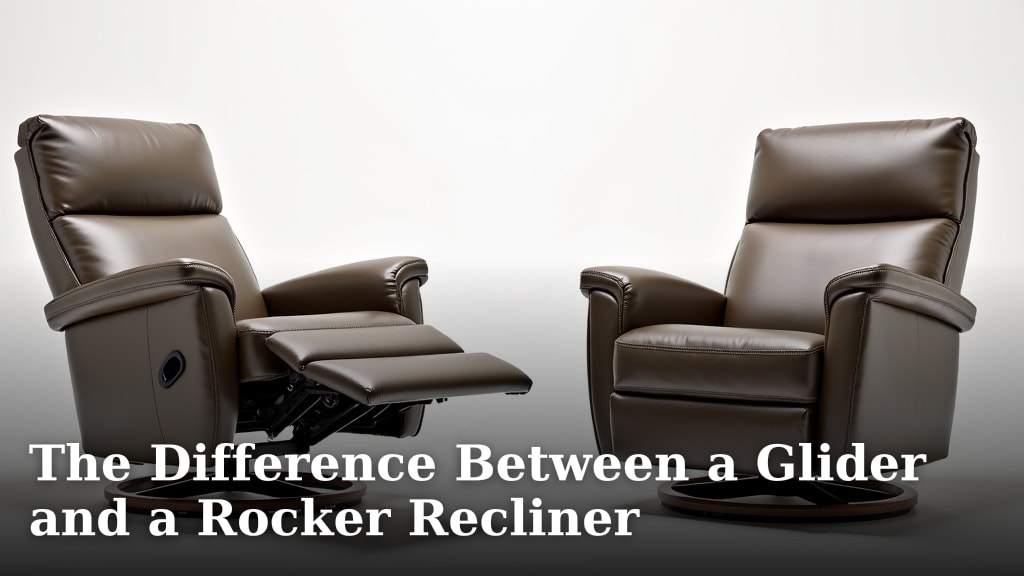
The Difference Between a Glider and a Rocker Recliner
Glider vs. Rocker Recliner: Key Differences Explained
Choosing between a glider and a rocker recliner often comes down to one core question: how do you want to move? The **primary difference** is the motion mechanism, which impacts comfort, space, and design. A glider moves back and forth on a track, while a rocker recliner uses a curved base to rock and recline. This fundamental distinction shapes every other aspect of the chair.
Think of it this way: a glider is like a smooth swing set for your living room. A rocker recliner is the classic chair that lets you rock and then lean back. But there’s more to it than just the motion. We’ll break down the mechanics, comfort, space needs, and ideal uses for each type of chair.
How the Motion Mechanism Actually Works
The way these chairs move is their defining feature. Let’s look at the engineering behind the motion you’ll feel every time you sit down.
The Glider’s Track-Based Movement
A glider operates on a **track and bearing system**. The chair itself doesn’t rock on curved rails. Instead, it slides back and forth along a fixed path. This creates a smooth, linear motion. It’s often compared to a porch swing. The movement is very controlled and consistent, which many people find calming.
- Smooth, linear path: Moves straight back and forth, not in an arc.
- Quieter operation: Fewer mechanical parts often mean less creaking.
- Requires less clearance: The motion is contained, so it needs less floor space behind it.
The Rocker Recliner’s Curved Base
A rocker recliner uses a traditional **curved runner system**, like a rocking chair. The chair is mounted on two rockers that allow it to sway back and forth in an arc. You can usually recline the backrest and extend a footrest, changing it from a rocker to a recliner. This gives you two distinct motions in one piece of furniture. To understand what these components are, read our guide to the parts of a recliner.
- Arching, rocking motion: Follows the classic, comforting arc of a rocking chair.
- Dual functionality: Combines rocking with a full reclining position.
- More traditional feel: The motion feels familiar and has been around for generations.
Design, Space, and Style Differences
Beyond the mechanics, the physical design of these chairs affects how they fit into your home. This is where practical considerations like room layout and interior design come into play.
Footprint and Room Layout
You need to think about how much space you have. A glider is often more compact because its motion doesn’t require as much clearance. A rocker recliner needs more room, especially behind it, to allow for the full rocking and reclining motion. According to many interior design guidelines, you should always measure twice and leave at least 18 inches of clearance from the wall for a rocker recliner (Mayo Clinic). A glider might only need 6-12 inches.
| Feature | Glider | Rocking Recliner |
|---|---|---|
| Motion Type | Linear, back-and-forth on a track | Arched, rocking on curved runners |
| Reclining | Usually does not recline; glides only | Typically includes a recline and footrest |
| Space Needed | Less floor space; compact motion | More space needed; clear area behind chair |
| Common Use | Nurseries, reading nooks | Living rooms, TV rooms, napping |
| Noise Level | Often quieter due to track system | Can be noisier, especially older models |
Aesthetic and Visual Appeal
Both chairs can be stylish, but they often have different looks. Gliders are common in **modern and transitional interiors**. They often have a sleek, armchair-like appearance. Rocking recliners can range from classic, overstuffed styles to more contemporary designs. The style you choose should match your existing furniture and room decor. A glider might fit better in a minimalist nursery, while a classic rocker recliner could be the centerpiece of a cozy den.
Comfort and Ergonomic Considerations
Comfort is personal, but there are objective factors to consider. How does each chair support your body, especially during long periods of sitting?
Support for Different Activities
A glider’s motion is often **gentler and more consistent**. This makes it excellent for soothing a baby or for someone who wants a steady, rocking motion without the fuss. Many pediatricians note that the rhythmic motion of a glider can help calm infants (Cleveland Clinic). A rocker recliner, however, offers more versatility. You can rock gently or recline fully to watch a movie or take a nap. The reclined position can also be **better for spinal alignment** if the chair is well-designed.
- Glider: Best for gentle, repetitive motion. Great for feeding or reading.
- Rocking Recliner: Better for versatile use: rocking, lounging, and napping.
Ergonomics and Posture
Good ergonomics is about supporting your body’s natural posture. Research shows that sitting in a slightly reclined position can reduce pressure on your lower back (NCBI). A rocker recliner’s ability to recline gives it an edge here. A glider, while comfortable, keeps you in a more upright position. If you have back pain, you might prefer the reclined option. But a glider’s upright position could be better for your posture if you’re reading or working on a laptop.
Best Uses: Where Each Chair Shines
Where will you put this chair? The answer might decide which one is better for you. Let’s match each chair to the room where it excels.
The Nursery and Baby’s Room
For nurseries, gliders are often the top choice. Their smooth, linear motion is **soothing for infants**. The compact design fits well in smaller rooms. Plus, the motion is easier on the parent’s arms and back when holding a baby. Many experts in child development recommend the rhythmic, back-and-forth motion for calming fussy babies.
The Living Room or Family Room
Here, the rocker recliner often wins. It’s perfect for kicking back after a long day. The ability to rock *and* recline makes it ideal for watching TV, reading, or napping. It’s a **versatile piece of furniture** for a family space. A glider can work here too, but it might feel less versatile if you want to fully recline.
Choosing the Right One for You
Deciding between a glider and a rocker recliner is a personal choice. But you can make it easier by asking yourself a few key questions. We’ve found that narrowing down these factors helps most shoppers.
Consider Your Primary Need
What’s the main reason you want this chair? Is it to soothe a baby? Is it to relax and watch TV? Or is it for reading in a cozy corner? Your primary use will guide you. A glider is specialized for gentle motion. A rocker recliner is a multi-purpose relaxation station.
Evaluate Your Space
Take a quick look at your room. Measure the available space, including clearance behind the chair. A rocker recliner needs more room to rock and recline safely. A glider is more forgiving in tighter spaces. Don’t forget to consider the doorways—some recliners are bulky and might not fit through easily.
Quick Decision Checklist
Still unsure? Run through this checklist. It’s designed to help you think through the most important factors in a simple way.
- Check your space: Do you have at least 18 inches of clearance behind the chair for a rocker recliner? A glider needs less.
- Define your main activity: Is it for baby care and gentle motion? Consider a glider. Is it for relaxing and napping? Consider a rocker recliner.
- Think about comfort needs: Do you need the option to fully recline? A rocker recliner does this. If you prefer upright support, a glider may be better.
- Consider noise level: Will you use it in a nursery where quiet is key? Gliders are often quieter. For a family room, the noise of a rocker recliner might be less of a concern.
- Assess the style: Does one match your current decor better? Look at the upholstery and overall shape.
- Test the motion (if possible): If you can, sit in both. The motion that feels best to you is the most important factor.
Final Thoughts on Making Your Pick
We’ve covered the key differences: motion, space, comfort, and use cases. Both glider and rocker recliners have their strengths. A glider offers a smooth, contained motion ideal for nurseries and small spaces. A rocker recliner provides versatile rocking and reclining, perfect for living rooms and relaxation.
Your choice should align with your lifestyle, your space, and how you plan to use the chair. By considering these factors, you can find the perfect chair that brings you comfort for years to come.
Conclusion
Choosing between a glider and a rocker recliner comes down to your specific needs. A glider offers smooth, compact motion perfect for nurseries and tighter spaces. A rocker recliner provides versatile rocking and reclining for living room relaxation. Your ideal choice depends on your primary use, available space, and personal comfort preference. To decide, we recommend **measuring your space and visiting a showroom** to test the motion of both styles. Feeling the difference for yourself is the best way to find the chair you’ll love for years.
Frequently Asked Questions
Which is generally more expensive, a glider or a rocker recliner?
Pricing varies widely by brand, material, and features. Generally, a basic rocker recliner may have a lower starting price than a nursery glider. However, premium models of both can be similarly expensive. **Always compare the specific features and build quality** within your budget.
Are gliders harder to clean than rocker recliners?
Cleaning depends more on the upholstery fabric than the mechanism. Both types can come in leather, performance fabric, or standard upholstery. For either chair, **check the manufacturer’s cleaning code** on the tag. Performance fabrics, common on nursery gliders, are often designed for easy wipe-downs.
Can a rocker recliner help with back pain?
For many people, yes. The ability to recline can **reduce pressure on the lower spine** by distributing your weight more evenly. A good quality rocker recliner with proper lumbar support is often recommended for this purpose. However, it’s always best to consult with a healthcare professional for specific pain issues.
Do glider chairs require assembly?
Most gliders and rocker recliners require some assembly. Typically, you’ll need to attach the backrest to the base and sometimes the arms. **Check product details before purchase**, as some arrive fully assembled, while others require significant setup. Many retailers offer white-glove delivery and assembly services for an extra fee.
How long do these chairs typically last?
Lifespan depends heavily on use, quality, and maintenance. With regular use, **a well-made chair from either category can last 7 to 15 years**. The mechanical components in a rocker recliner might wear out before a simple glider track. Following the manufacturer’s care instructions will help maximize its longevity.